
CST4 (cystatin S)

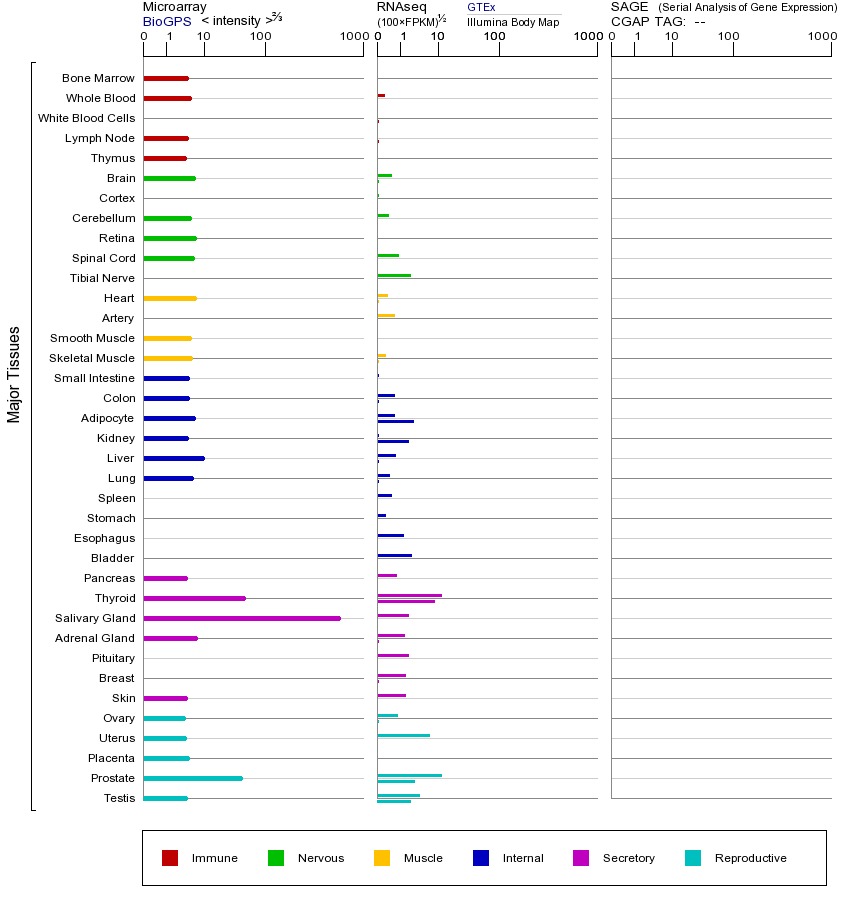
The cystatin superfamily encompasses proteins that contain multiple cystatin-like sequences. Some of the members are active cysteine protease inhibitors, while others have lost or perhaps never acquired this inhibitory activity. There are three inhibitory families in the superfamily, including the type 1 cystatins (stefins), type 2 cystatins and the kininogens. The type 2 cystatin proteins are a class of cysteine proteinase inhibitors found in a variety of human fluids and secretions. The cystatin locus on chromosome 20 contains the majority of the type 2 cystatin genes and pseudogenes. This gene is located in the cystatin locus and encodes a type 2 salivary cysteine peptidase inhibitor. The protein is an S-type cystatin, based on its high level of expression in saliva, tears and seminal plasma. The specific role in these fluids is unclear but antibacterial and antiviral activity is present, consistent with a protective function. [provided by RefSeq, Jul 2008]
Gene Ontology
Subcellular localization of CST4 (and its protein):
- plasma membrane
- cytoplasm
- extracellular
- golgi
- vesicle
- cytoskeleton
- endoplasmic reticulum
- nucleus
- endosome
- lysosome
- mitochondrion
Gene Ontology (GO) terms for CST4:
| Interacting Gene | Interaction | Source/Score |
| Disease | Score | NofPmids | NofSnps | Source |
| Bacterial Vaginosis | 0.000271442 | 1 | 0 | BeFree |
| Vulvovaginal atrophy | 0.000271442 | 1 | 0 | BeFree |

Contact
No. 2 Wenbo Road, Zhangqiu District, Jinan, Shandong
Qilu Normal University · Genelibs Bioinformatics Lab
750 Shunhua Rd, Jinan
2F, Bldg F, University Science Park
Tel: 0531-88819269
WeChat Official Account
Follow our WeChat subscription account for real-time updates and the latest in medical and biological research.
Business Email
E-mail: [email protected]

Copyright © 2026.Genelibs Jinan Honghui Biotechnology Co., Ltd. 鲁ICP备20007159号-2
