
CST3 (cystatin C)

symbol:
CST3
locus group:
protein-coding gene
location:
20p11.21
gene_family:
alias symbol:
None
alias name:
None
entrez id:
1471
ensembl gene id:
ENSG00000101439
ucsc gene id:
uc002wtm.5
refseq accession:
NM_000099
hgnc_id:
HGNC:2475
approved reserved:
1990-02-06
20p11.21

CST3(Cystatin 3)是一种半胱氨酸蛋白酶抑制剂,属于胱抑素(Cystatin)超家族中的II型胱抑素家族成员。该基因家族的主要共性是能够抑制半胱氨酸蛋白酶(如组织蛋白酶B、H、L等)的活性,从而参与调控蛋白质降解、炎症反应、免疫调节及细胞凋亡等生物学过程。CST3在多种组织中广泛表达,尤其在脑脊液、唾液和精液中含量较高,其表达产物Cystatin C是一种低分子量蛋白质,具有重要的生理功能。CST3的主要作用位点包括溶酶体和细胞外空间,通过与半胱氨酸蛋白酶结合,抑制其活性,防止过度蛋白水解导致的组织损伤。CST3的突变可能导致其抑制功能丧失,与多种疾病相关,如阿尔茨海默病(淀粉样蛋白沉积增加)、脑动脉瘤和某些癌症(如胶质瘤和乳腺癌),因其调控异常可能促进肿瘤侵袭和转移。CST3过表达可能增强对蛋白酶的抑制,减少组织破坏,但过度抑制也可能干扰正常的蛋白降解过程,影响细胞功能;而CST3表达降低则可能导致蛋白酶活性升高,加剧炎症或组织损伤,例如在神经退行性疾病中,Cystatin C水平下降可能加速淀粉样蛋白积累。此外,CST3还与其他基因或通路相互作用,如通过调节NF-κB信号通路影响炎症反应。II型胱抑素家族成员通常具有保守的结构域(如两个二硫键和一个蛋白酶结合环),但CST3因其独特的组织分布和功能特点(如作为肾小球滤过率的标志物)在临床诊断中具有重要价值。

ChineseEnglish

The cystatin superfamily encompasses proteins that contain multiple cystatin-like sequences. Some of the members are active cysteine protease inhibitors, while others have lost or perhaps never acquired this inhibitory activity. There are three inhibitory families in the superfamily, including the type 1 cystatins (stefins), type 2 cystatins and the kininogens. The type 2 cystatin proteins are a class of cysteine proteinase inhibitors found in a variety of human fluids and secretions, where they appear to provide protective functions. The cystatin locus on chromosome 20 contains the majority of the type 2 cystatin genes and pseudogenes. This gene is located in the cystatin locus and encodes the most abundant extracellular inhibitor of cysteine proteases, which is found in high concentrations in biological fluids and is expressed in virtually all organs of the body. A mutation in this gene has been associated with amyloid angiopathy. Expression of this protein in vascular wall smooth muscle cells is severely reduced in both atherosclerotic and aneurysmal aortic lesions, establishing its role in vascular disease. In addition, this protein has been shown to have an antimicrobial function, inhibiting the replication of herpes simplex virus. Alternative splicing results in multiple transcript variants encoding a single protein. [provided by RefSeq, Nov 2014]
Nucleotide sequence of CST3:[NCBI]
Loading Gene Browser...
Protein Sequence
1MAGPLRAPLL LLAILAVALA VSPAAGSSPG KPPRLVGGPM
41DASVEEEGVR RALDFAVGEY NKASNDMYHS RALQVVRARK
81 QIVAGVNYF LDVELGRTTC TKTQPNLDNC PFHDQPHLKR
121KAFCSFQIYA VPWQGTMTLS KSTCQDA
结构预测来自 AlphaFold DB(UniProt: P01034),颜色表示 pLDDT 置信度(深蓝高、黄橙低)。
SNP variants of CST3:           Showing partial SNPs
rs11504       rs14766       rs14767       rs734801       rs911119       rs1010117       rs1055084       rs1059137       rs1059253       rs1064039       rs2424574       rs2424575       rs2424576       rs2424577       rs2424578       rs2424579       rs2424580      

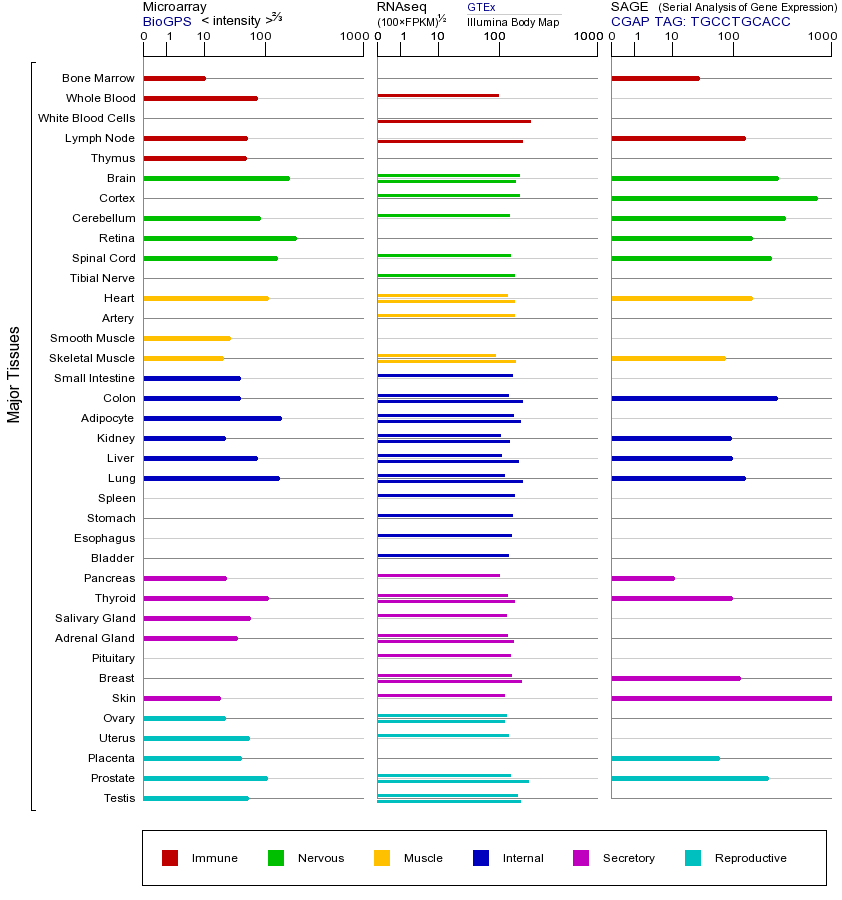
Tissue expression of CST3:    [UniProt]

Gene expression across tissues
Forward Primer
Forward Tm
Reverse Primer
Reverse Tm
Score
CTACTTCTTGGACGTGGAG
57
AAGAGCAGAATGCTTTCCT
57
CTACTTCTTGGACGTGGAG
57
AAGAGCAGAATGCTTTCCT
57
CTACTTCTTGGACGTGGAG
57
AAGAGCAGAATGCTTTCCT
57
GAACCACGTGTACCAAGAC
59
GAAAGAGCAGAATGCTTTCCT
59
GAACCACGTGTACCAAGAC
59
GAAAGAGCAGAATGCTTTCCT
59
GAACCACGTGTACCAAGAC
59
GAAAGAGCAGAATGCTTTCCT
59
GAACCACGTGTACCAAGAC
59
AAAGAGCAGAATGCTTTCCT
58
GAACCACGTGTACCAAGAC
59
AAAGAGCAGAATGCTTTCCT
58
GAACCACGTGTACCAAGAC
59
AAAGAGCAGAATGCTTTCCT
58
      No data available

Subcellular localization of CST3 (and its protein):

[UniProt]     [GenomeNet]

" d="M482.414,245.296c3.539,4.293,4.455,10.009,0.202,11 c-4.244,0.996-4.983-10.983-8.293-8.438c-5.271,4.08,9.834,12.271,5.144,17.287c-3.717,3.607-6.172-5.75-10.839-1.976 c-4.673,3.776,6.781,7.299,2.831,11.326c-4.354,4.045-6.979-1.449-9.837-5.517c-1.193-1.742-2.059-3.851-3.595-2.748 c-1.516,1.078-1.854,1.795-0.938,3.666c2.374,4.854,9.235,10.119,5.156,12.535c-5.636,3.346-5.044-8.871-9.426-7.574 c-4.388,1.291,2.557,10.66-1.245,11.141c-4.089,0.545-3.483-10.239-6.979-8.575c-2.522,1.206-0.929,3.071-0.938,4.899 c0.004,1.32-0.964,3.6-2.372,4.062c-3.593,1.171-8.544-1.065-10.251-3.59c-6.04-8.93,0.396-15.997,4.639-7.015 c3.023,4.642,5.182,0.834,2.839-2.219c-1.032-1.354-4.309-5.901-0.781-7.252c2.904-1.113,4.271,1.941,5.985,4.592 c2.61,4.016,5.485,0.117,3.031-3.414c-1.828-2.633-2.74-3.803,3.156-7.42c6.405-4.369,6.52,3.869,10.077,0.646 c2.309-1.832-4.783-5.149,0.06-8.995c2.896-2.293,5.18,6.207,7.961,3.516c3.523-2.737-7.717-7.369,0.117-11.736 C473.413,240.77,480.519,242.891,482.414,245.296z"/> Extracellular space Cytosol Plasma membrane Cytoskeleton Lysosome Endosome Peroxisome ER Golgi Apparatus Nucleus Mitochondrion 0 1 2 3 4 5 Confidence
  • plasma membrane
  • cytoplasm
  • extracellular
  • golgi
  • vesicle
  • cytoskeleton
  • endoplasmic reticulum
  • nucleus
  • endosome
  • lysosome
  • mitochondrion

Gene Ontology (GO) terms for CST3:

GO ID
Protein
Source DB
GO:0001540
P01034 (UniProtKB)
IPI
GO:0002020
P01034 (UniProtKB)
IPI
GO:0002020
P01034 (UniProtKB)
IPI
GO:0002020
P01034 (UniProtKB)
IPI
GO:0004866
P01034 (UniProtKB)
IDA
GO:0004869
P01034 (UniProtKB)
IDA
GO:0004869
P01034 (UniProtKB)
IDA
GO:0004869
P01034 (UniProtKB)
IDA
GO:0005515
P01034 (UniProtKB)
IPI
GO:0005576
P01034 (UniProtKB)
IMP
GO:0005576
P01034 (UniProtKB)
TAS
GO:0005576
P01034 (UniProtKB)
TAS
GO:0005615
P01034 (UniProtKB)
IDA
GO:0005615
P01034 (UniProtKB)
IDA
GO:0005615
P01034 (UniProtKB)
IDA
GO:0006952
P01034 (UniProtKB)
IDA
GO:0010466
P01034 (UniProtKB)
IDA
GO:0010466
P01034 (UniProtKB)
IDA
GO:0010711
P01034 (UniProtKB)
IEP
GO:0010716
P01034 (UniProtKB)
IEP
GO:0010716
P01034 (UniProtKB)
IC
GO:0010951
P01034 (UniProtKB)
IEA
GO:0010951
P01034 (UniProtKB)
IEA
GO:0031012
P01034 (UniProtKB)
IEA
GO:0034103
P01034 (UniProtKB)
IEP
GO:0042802
P01034 (UniProtKB)
IPI
GO:0043206
P01034 (UniProtKB)
IGI
GO:0044267
P01034 (UniProtKB)
TAS
GO:0045861
P01034 (UniProtKB)
IDA
GO:0060311
P01034 (UniProtKB)
IMP
GO:0060313
P01034 (UniProtKB)
IEP
GO:0070062
P01034 (UniProtKB)
IDA
GO:0070062
P01034 (UniProtKB)
IDA
GO:0070062
P01034 (UniProtKB)
IDA
GO:0070062
P01034 (UniProtKB)
IDA

microRNAs potentially regulating CST3:     

String
BioGrid
IntAct
mentha
MINT
Reactome
Loading…
Interacting Gene Interaction Source/Score
Disease Score NofPmids NofSnps Source
Hereditary Cerebral Amyloid Angiopathy, Icelandic Type 0.361900093 8 1 BeFree_CLINVAR_ORPHANET_UNIPROT
Age-Related Macular Degeneration type 11 0.36 1 1 CLINVAR_CTD_human_UNIPROT
Alzheimer's Disease 0.178685116 32 0 BeFree_CTD_human_GAD_LHGDN
Kidney Diseases 0.126263026 7 0 BeFree_CTD_human_LHGDN
Cardiovascular Diseases 0.123724241 7 0 BeFree_CTD_human_GAD
Meningioma 0.123267234 2 0 BeFree_CTD_human_LHGDN
Chronic Kidney Diseases 0.122714419 10 3 BeFree_GWASCAT
Oral Submucous Fibrosis 0.122638474 2 0 BeFree_CTD_human_GAD
Familial Cerebral Amyloid Angiopathy 0.120814326 4 0 BeFree_CTD_human
Leukemia, Myelocytic, Acute 0.120271442 2 0 BeFree_CTD_human
Novel Plasma Proteomic Markers and Risk of Venous Thromboembolism.
Tang W, Li A, Austin TR, Brækkan SK, Nøst TH, Li X, Deo R, Dubin R, Ganz P, Guan W, Cao R, Hansen JB, Hveem K, Hoogeveen RC, Jonasson C, Rotter JI, Matsushita K, Liu G, Pankow JS, Pankratz N, Psaty BM, Taylor KD, Thibord F, Boerwinkle E, Smith NL, Cushman M, Folsom AR Circulation IF: 41.3 2026-03-17
H3K18la- driven neutrophil secretory autophagy promotes pulmonary endothelial dysfunction in sepsis-induced lung injury.
Li Y, Li R, Zhu D, Tian R, Chen Y, Wang X, Li L, Pan T, Tan R, Qu H Autophagy IF: 18.6 2026-06-12
A large-scale plasma proteomic study reveals the preclinical evolution and potential biomarkers for coronary atherosclerosis.
Wang C, Yan C, Ren Q, Lu S, Wang N, Guo Y, Sun C, Xu Y, Zhou T, Liu Q, Hu J, Liu C, Zhang C, Sun H, Lv W, Shang Z, Zhang M, Lv H, Jiang Y Cardiovasc Pathol IF: 2.0 None
Transcriptional and ubiquitinative suppression of macrophage CST3 disrupts colonic homeostasis through defective efferocytosis.
Wang H, Jiao C, Xing H, Cheng C, Cheng S, Jiang W, Xu Z, Yang J, Sun J, Zhao J Cell Death Differ IF: 13.6 2026-05-05
Uncovering potential biomarkers for chronic kidney disease of unknown etiology through a network-based bioinformatic approach.
Jolly AM, Benny S, Presanna AT, Nair RR, Thomas J Naunyn Schmiedebergs Arch Pharmacol IF: 4.0 2026-06-00

Loading comments...

Log in to post comments Log In Sign Up

Contact

No. 2 Wenbo Road, Zhangqiu District, Jinan, Shandong

Qilu Normal University · Genelibs Bioinformatics Lab

750 Shunhua Rd, Jinan

2F, Bldg F, University Science Park

Tel: 0531-88819269

WeChat Official Account

Follow our WeChat subscription account for real-time updates and the latest in medical and biological research.


Business Email

E-mail: [email protected]

