
PER3 (period circadian regulator 3)

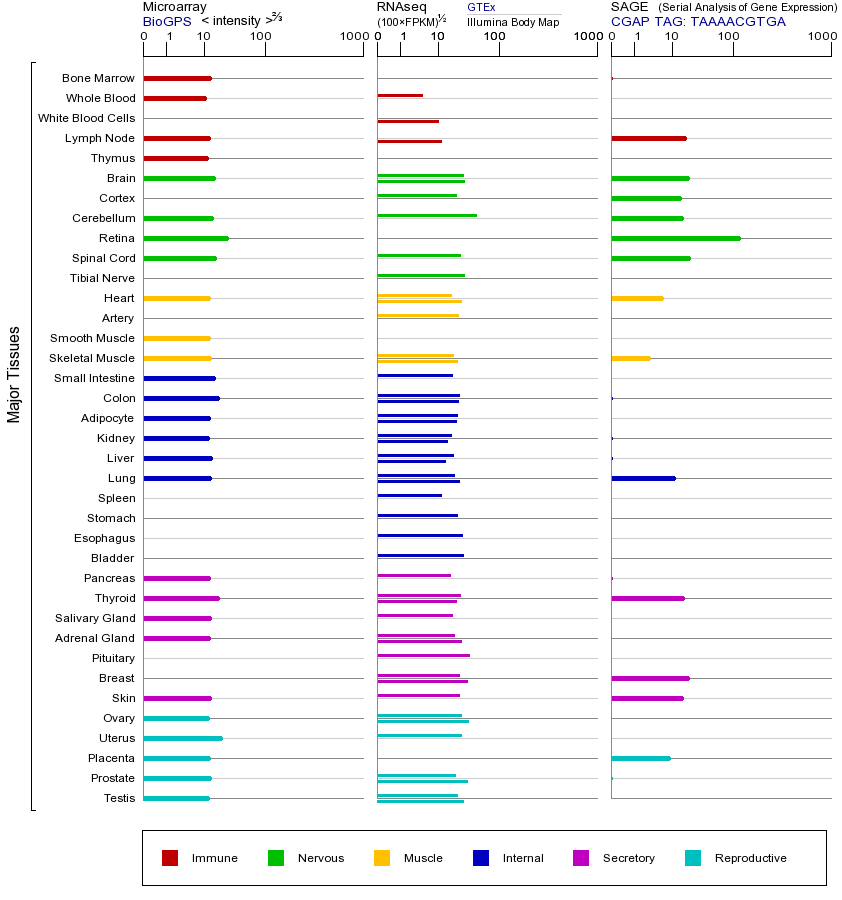
PER3 (Period Circadian Regulator 3) is a core component of the Period (Per) gene family, which, alongside PER1 and PER2, plays a pivotal role in orchestrating the mammalian circadian rhythm, the approximately 24-hour cycle governing physiological and behavioral processes. The PER3 protein, characterized by the presence of PAS domains that facilitate protein-protein interactions and a nuclear localization signal, forms a critical inhibitory complex with CRY (Cryptochrome) proteins. This complex acts to suppress the transcriptional activity of the CLOCK/BMAL1 heterodimer, thereby establishing a negative feedback loop that maintains the stability and precision of the circadian oscillation. Expression of PER3 is prominent in the suprachiasmatic nucleus (SCN), the master pacemaker of the brain, as well as in peripheral tissues, where its levels exhibit robust circadian oscillations. The stability and function of PER3, like other PER family members, are tightly regulated by phosphorylation events, particularly those mediated by casein kinase 1 epsilon and delta (CK1ε/δ), which target the protein for degradation. Genetic variations in PER3 have significant clinical and physiological implications; for instance, the rs57875989 polymorphism is associated with a "morningness" phenotype, while specific rare mutations can lead to Familial Advanced Sleep Phase Syndrome (FASPS). Furthermore, altered PER3 expression is linked to an increased risk of sleep disorders, depression, and bipolar disorder, and circadian disruptions involving PER3 may contribute to metabolic abnormalities such as impaired glucose metabolism. Experimental manipulations highlight the gene's nuanced role: overexpression can enhance circadian stability but potentially reduce sensitivity to light-induced phase resetting, whereas knockdown leads to attenuated circadian amplitude, disrupted sleep architecture characterized by reduced REM sleep, and cognitive decline. Notably, PER3 length polymorphisms, such as the 5-repeat allele, are strongly correlated with individual differences in resilience to sleep deprivation. Beyond its primary role in timekeeping, PER3 is implicated in tumorigenesis, with aberrant methylation patterns observed in certain cancers, underscoring the broader biological significance of the PER family in maintaining homeostasis through shared structural motifs and regulatory mechanisms, despite functional redundancies and tissue-specific expression differences.
Gene Ontology
Subcellular localization of PER3 (and its protein):
- plasma membrane
- cytoplasm
- extracellular
- golgi
- vesicle
- cytoskeleton
- endoplasmic reticulum
- nucleus
- endosome
- lysosome
- mitochondrion
Gene Ontology (GO) terms for PER3:
| Interacting Gene | Interaction | Source/Score |
| Name |
|---|
| 4710 Circadian rhythm [PATH:hsa04710] |
| 4713 Circadian entrainment [PATH:hsa04713] |
| 5168 Herpes simplex infection [PATH:hsa05168] |
| Disease | Score | NofPmids | NofSnps | Source |
| Myeloid Leukemia, Chronic | 0.122995792 | 1 | 0 | BeFree_CTD_human_LHGDN |
| Crohn Disease | 0.122367032 | 1 | 1 | GAD_GWASCAT |
| Substance Withdrawal Syndrome | 0.12 | 1 | 0 | CTD_human |
| Mammary Neoplasms | 0.12 | 1 | 0 | CTD_human |
| Sleep Deprivation | 0.01183516 | 5 | 0 | GAD |
| Bipolar Disorder | 0.010553895 | 6 | 0 | BeFree_GAD |
| Sleep Disorders | 0.005819831 | 6 | 0 | BeFree_GAD |
| Malignant neoplasm of prostate | 0.005005506 | 2 | 12 | BeFree_GAD |
| Schizophrenia | 0.005005506 | 2 | 0 | BeFree_GAD |
| Liver carcinoma | 0.003810118 | 5 | 1 | BeFree_LHGDN |

Contact
No. 2 Wenbo Road, Zhangqiu District, Jinan, Shandong
Qilu Normal University · Genelibs Bioinformatics Lab
750 Shunhua Rd, Jinan
2F, Bldg F, University Science Park
Tel: 0531-88819269
WeChat Official Account
Follow our WeChat subscription account for real-time updates and the latest in medical and biological research.
Business Email
E-mail: [email protected]

Copyright © 2026.Genelibs Jinan Honghui Biotechnology Co., Ltd. 鲁ICP备20007159号-2
