
PGM2 (phosphoglucomutase 2)

symbol
PGM2
locus group
protein-coding gene
location
4p14
gene_family
-
alias symbol
FLJ10983
alias name
phosphopentomutase
entrez id
55276
ensembl gene id
ENSG00000169299
ucsc gene id
uc011byb.2
refseq accession
NM_018290
hgnc_id
HGNC:8906
approved reserved
2001-06-22
4p14
ChineseEnglish

Phosphoglucomutase 2 (PGM2) is a critical metabolic enzyme belonging to the phosphoglucomutase (PGM) gene family, which plays a central role in carbohydrate metabolism by catalyzing the reversible interconversion of glucose-1-phosphate (G1P) and glucose-6-phosphate (G6P). This reaction, which relies on a conserved catalytic domain and a magnesium-ion-dependent active center shared among family members such as PGM1 and PGM3, is indispensable for balancing energy homeostasis through glycolysis, gluconeogenesis, and glycogen synthesis and degradation. PGM2 is widely expressed across various tissues, with particularly high enzymatic activity observed in the liver and skeletal muscle, where it directly influences metabolic flux. Mutations in the PGM2 gene can lead to reduced or absent enzyme activity, resulting in rare genetic disorders such as PGM2-congenital disorder of glycosylation (PGM2-CDG), which is characterized by developmental delay, muscle weakness, seizures, and hepatic dysfunction due to impaired energy supply and glycogen synthesis. Conversely, altered expression levels of PGM2 have significant physiological implications; overexpression may enhance the efficiency of glycolytic pathways but risks disrupting normal energy balance and potentially contributing to the metabolic reprogramming seen in certain cancers, where tumor cells rely heavily on glycolysis for energy production (the Warburg effect). On the other hand, decreased PGM2 expression limits G6P generation, thereby compromising glycolysis and the pentose phosphate pathway, which can lead to cellular energy deficits and diminished antioxidant capacity. Understanding the precise mechanisms and regulatory differences of PGM2 compared to other PGM family members provides valuable insights into the pathogenesis of metabolic diseases and offers potential therapeutic targets, such as substrate replacement therapies, for managing associated conditions.
Nucleotide sequence of PGM2:[NCBI]
Loading Gene Browser...
Protein Sequence
1MAAPEGSGLG EDARLDQETA QWLRWDKNSL TLEAVKRLIA
41EGNKEELRKC FGARMEFGTA GLRAAMGPGI SRMNDLTIIQ
81 TTQGFCRYL EKQFSDLKQK GIVISFDARA HPSSGGSSRR
121FARLAATTFI SQGIPVYLFS DITPTPFVPF TVSHLKLCAG
161I MITASHNP KQDNGYKVYW DNGAQIISPH DKGISQAIEE
201NLEPWPQAWD DSLIDSSPLL HNPSASINND YFEDLKKYCF
241HR SVNRETK VKFVHTSVHG VGHSFVQSAF KAFDLVPPEA
281VPEQKDPDPE FPTVKYPNPE EGKGVLTLSF ALADKTKARI
321VLA NDPDAD RLAVAEKQDS GEWRVFSGNE LGALLGWWLF
361TSWKEKNQDR SALKDTYMLS STVSSKILRA IALKEGFHFE
401ETLT GFKWM GNRAKQLIDQ GKTVLFAFEE AIGYMCCPFV
441LDKDGVSAAV ISAELASFLA TKNLSLSQQL KAIYVEYGYH
481ITKAS YFIC HDQETIKKLF ENLRNYDGKN NYPKACGKFE
521ISAIRDLTTG YDDSQPDKKA VLPTSKSSQM ITFTFANGGV
561ATMRTS GTE PKIKYYAELC APPGNSDPEQ LKKELNELVS
601AIEEHFFQPQ KYNLQPKAD
Structure predicted by AlphaFold DB(UniProt: Q96G03). Color indicates pLDDT confidence (dark blue = high, yellow/orange = low).
SNP variants of PGM2:           Showing partial SNPs
rs9883       rs10569       rs1030349       rs1989324       rs2059483       rs2059484       rs2241498       rs2241499       rs2261414       rs2290741       rs2290742       rs2290743       rs2303409       rs2553287       rs2553288       rs2553289       rs2553290      

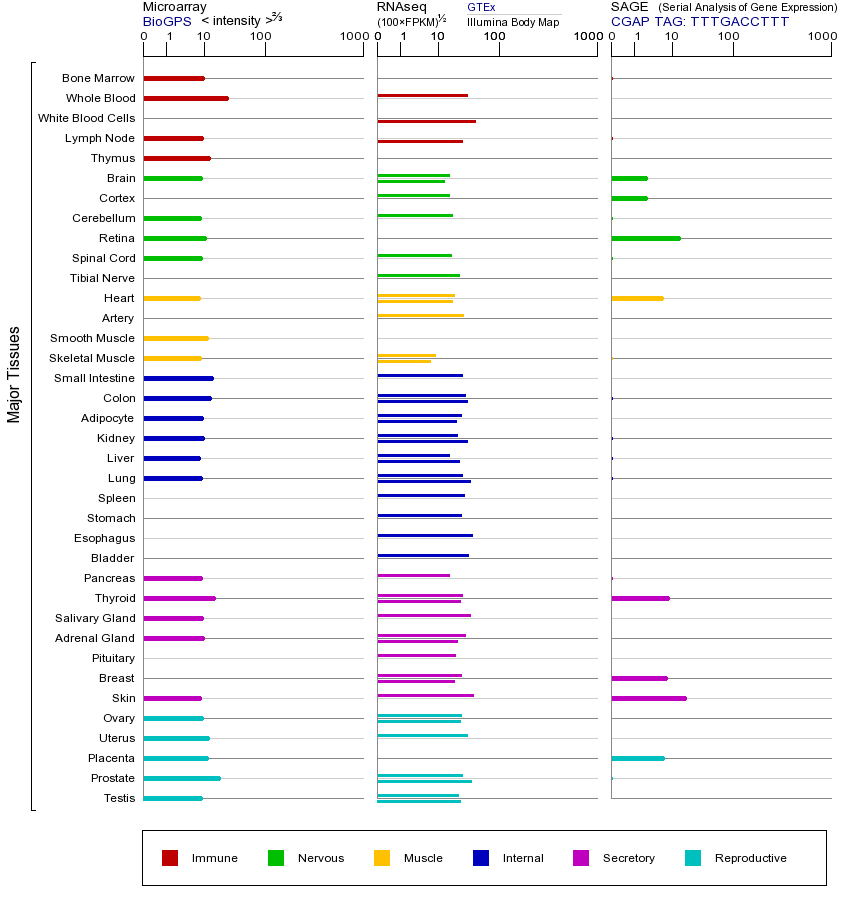
Tissue expression of PGM2:    [UniProt]

Gene expression across tissues
Forward Primer
Forward Tm
Reverse Primer
Reverse Tm
Score
CTGCAACCACATTTATCAGTC
58
ATGCTTCTACCACAAAGGG
57
GAATGGAGTTTGGGACAGC
59
CAAATGTGATACTGTGTAGTCTGG
60
GCAAGACAGTGGTGAATGG
59
TCCTGGTTCTTCTCTTTCCA
58
TGAGGAAACATTAACTGGCT
57
TAGTGGGAAGAACCAATAGC
57
CTGCAACCACATTTATCAGTC
58
ATGCTTCTACCACAAAGGG
57
GCAACCACATTTATCAGTCAG
58
GTGATACTGTGAAGGGCAC
58
GGGAAACAGAGCCAAACAG
59
CTAGTGGGAAGAACCAATAGC
58
GTAGCAGCAGAAGGTTTGC
60
TAAGCCTCCATTCCAATGCT
60
CTGCAACCACATTTATCAGTC
58
ATGCTTCTACCACAAAGGG
57
CAACCACATTTATCAGTCAGGG
59
TCAATGCTTCTACCACAAAGG
59

Subcellular localization of PGM2 (and its protein):

[UniProt]     [GenomeNet]

" d="M482.414,245.296c3.539,4.293,4.455,10.009,0.202,11 c-4.244,0.996-4.983-10.983-8.293-8.438c-5.271,4.08,9.834,12.271,5.144,17.287c-3.717,3.607-6.172-5.75-10.839-1.976 c-4.673,3.776,6.781,7.299,2.831,11.326c-4.354,4.045-6.979-1.449-9.837-5.517c-1.193-1.742-2.059-3.851-3.595-2.748 c-1.516,1.078-1.854,1.795-0.938,3.666c2.374,4.854,9.235,10.119,5.156,12.535c-5.636,3.346-5.044-8.871-9.426-7.574 c-4.388,1.291,2.557,10.66-1.245,11.141c-4.089,0.545-3.483-10.239-6.979-8.575c-2.522,1.206-0.929,3.071-0.938,4.899 c0.004,1.32-0.964,3.6-2.372,4.062c-3.593,1.171-8.544-1.065-10.251-3.59c-6.04-8.93,0.396-15.997,4.639-7.015 c3.023,4.642,5.182,0.834,2.839-2.219c-1.032-1.354-4.309-5.901-0.781-7.252c2.904-1.113,4.271,1.941,5.985,4.592 c2.61,4.016,5.485,0.117,3.031-3.414c-1.828-2.633-2.74-3.803,3.156-7.42c6.405-4.369,6.52,3.869,10.077,0.646 c2.309-1.832-4.783-5.149,0.06-8.995c2.896-2.293,5.18,6.207,7.961,3.516c3.523-2.737-7.717-7.369,0.117-11.736 C473.413,240.77,480.519,242.891,482.414,245.296z"/> Extracellular space Cytosol Plasma membrane Cytoskeleton Lysosome Endosome Peroxisome ER Golgi Apparatus Nucleus Mitochondrion 0 1 2 3 4 5 Confidence
  • plasma membrane
  • cytoplasm
  • extracellular
  • golgi
  • vesicle
  • cytoskeleton
  • endoplasmic reticulum
  • nucleus
  • endosome
  • lysosome
  • mitochondrion

Gene Ontology (GO) terms for PGM2:

GO ID
Protein
Source DB
GO:0005975
E7ENQ8 (UniProtKB)
IEA
GO:0016868
E7ENQ8 (UniProtKB)
IEA
GO:0005975
E9PD70 (UniProtKB)
IEA
GO:0016868
E9PD70 (UniProtKB)
IEA
GO:0005975
H0Y921 (UniProtKB)
IEA
GO:0016868
H0Y921 (UniProtKB)
IEA
GO:0000287
Q96G03 (UniProtKB)
IEA
GO:0004614
Q96G03 (UniProtKB)
EXP
GO:0005515
Q96G03 (UniProtKB)
IPI
GO:0005515
Q96G03 (UniProtKB)
IPI
GO:0005829
Q96G03 (UniProtKB)
IBA
GO:0005829
Q96G03 (UniProtKB)
TAS
GO:0005829
Q96G03 (UniProtKB)
TAS
GO:0005829
Q96G03 (UniProtKB)
TAS
GO:0005978
Q96G03 (UniProtKB)
TAS
GO:0005980
Q96G03 (UniProtKB)
TAS
GO:0006006
Q96G03 (UniProtKB)
IEA
GO:0006098
Q96G03 (UniProtKB)
TAS
GO:0008973
Q96G03 (UniProtKB)
IDA
GO:0008973
Q96G03 (UniProtKB)
TAS
GO:0019388
Q96G03 (UniProtKB)
TAS
GO:0046386
Q96G03 (UniProtKB)
IEA
GO:0070062
Q96G03 (UniProtKB)
IDA

microRNAs potentially regulating PGM2:     

String
BioGrid
IntAct
mentha
Reactome
Loading…
Interacting Gene Interaction Source/Score
Integrated GWAS and eQTL Colocalization Identified Candidate Genes for Growth Traits in Pigs.
Wu X, Wu J, Gu Y, Qiao M, Zhou J, Li Z, Feng Y, Chen T, Chen D, Mei S, Peng X, Xu Z Biology (Basel) IF: 3.5 2026-07-22
Salivary proteomic profiling of hookah and conventional cigarette users without clinical oral disease: Preliminary findings.
Costa TIS, de Souza Salardani M, do Carmo Carvalho BF, Zimiani CF, Santos JN, De Rossi T, Almeida JD, Hayashi JY, Tashima AK, Leme AFP, Zelanis A, Alves MGO Nicotine Tob Res IF: 2.7 2026-07-28
Multi-Organ Transcriptomic Analysis of Greater Amberjack (Seriola dumerili) with Different Growth Rates.
Ru X, Li X, Huang Y, Chen P, Deng Q, Li H, Zhou Q, Lin H, Hao R, Liao Y, Wu J, Zhao Y, Zhu C Animals (Basel) IF: 3.2 2026-02-06
Integrating sequence-based GWAS and comparative genomic analysis reveals conservation and species-specificity of putative functional variants influencing tail length and tail abnormalities in pigs and sheep.
Zhang X, Mainzer J, Giambra I, Yin T, Engel P, Hümmelchen H, Wagner H, Wehrend A, Egerer C, Gerhards K, Reiner G, König S PLoS One IF: 2.6 None
Integrative analysis of rumen microbiota and host multi-organ interactions underlying feed conversion efficiency in Hu sheep.
Jia X, Zhang Y, Tian B, Zhang G, Mao S, Qian W, Sun D, Liu J J Anim Sci Biotechnol IF: 7.9 2026-02-03
Integrated Multi-omics Analysis of Hub Genes and miRNA Interactions in Hypertrophic Cardiomyopathy.
Hu H, Yu Z, Lu K, Hu H, Deng L Curr Genomics IF: 4.0 2025-00-00

Loading comments...

Log in to post comments Log In Sign Up

Contact

No. 2 Wenbo Road, Zhangqiu District, Jinan, Shandong

Qilu Normal University · Genelibs Bioinformatics Lab

750 Shunhua Rd, Jinan

2F, Bldg F, University Science Park

Tel: 0531-88819269

WeChat Official Account

Follow our WeChat subscription account for real-time updates and the latest in medical and biological research.


Business Email

E-mail: [email protected]

