
RXRA (retinoid X receptor alpha)

RXRA, which encodes the retinoid X receptor alpha (RXRα), is a member of the retinoid X receptor subfamily within the nuclear receptor superfamily, a group that also includes RXRB and RXRG. As a ligand-activated transcription factor, RXRα primarily functions within the cell nucleus by binding to specific DNA sequences known as hormone response elements to modulate the transcription of downstream target genes. A defining characteristic of RXRα is its ability to form homodimers or, more commonly, heterodimers with other nuclear receptors, such as the vitamin D receptor, thyroid hormone receptor, and peroxisome proliferator-activated receptors (PPARs); this dimerization is essential for the cross-regulation of diverse signaling pathways. Upon binding ligands such as 9-cis-retinoic acid, RXRα undergoes conformational changes that facilitate the recruitment of coactivators or corepressors, thereby activating or repressing gene expression involved in critical biological processes including cell differentiation, proliferation, embryonic development, and the regulation of lipid and glucose metabolism. Notably, the synergistic interaction between RXRα and PPARγ is pivotal for adipocyte differentiation, highlighting its central role in metabolic homeostasis. Disruptions in RXRA function, such as mutations like P467L that impair ligand binding or dimerization capacity, can lead to significant pathological consequences, including contributions to the development of cancers such as hepatocellular carcinoma and leukemia, metabolic disorders like diabetes, and developmental abnormalities. Conversely, aberrant expression levels of RXRA, whether overexpression leading to uncontrolled cell proliferation and metabolic dysregulation or underexpression causing defects in tissue differentiation, further underscore the gene's critical importance in maintaining physiological balance and its relevance to various human diseases.
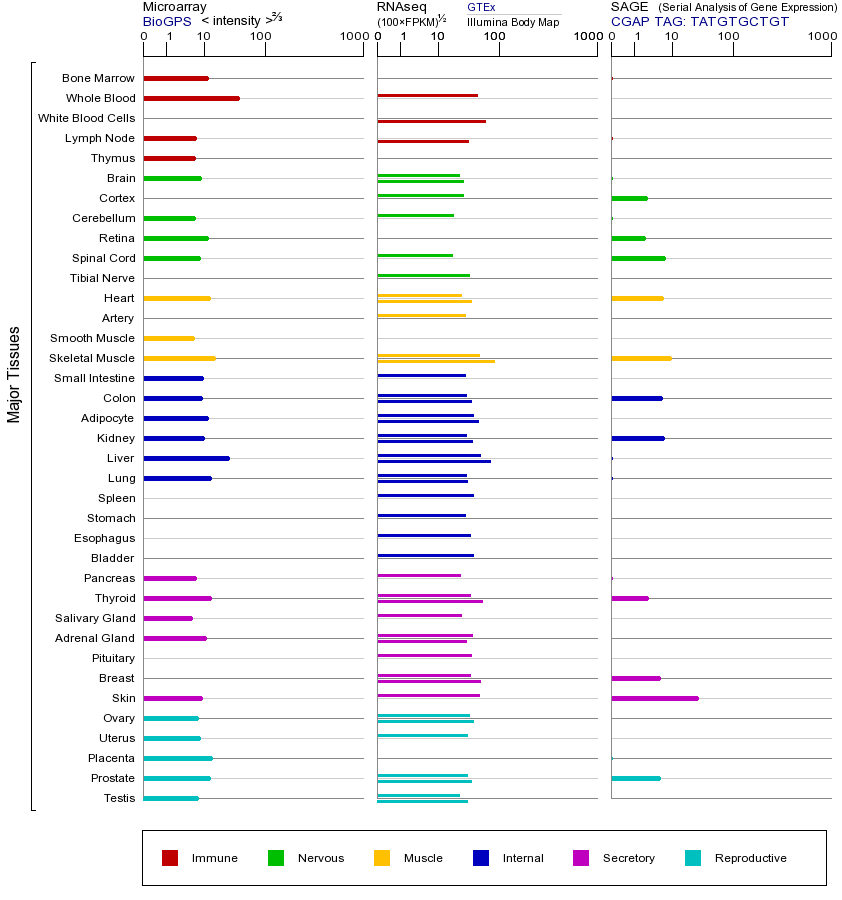
Gene Ontology
Subcellular localization of RXRA (and its protein):
- plasma membrane
- cytoplasm
- extracellular
- golgi
- vesicle
- cytoskeleton
- endoplasmic reticulum
- nucleus
- endosome
- lysosome
- mitochondrion
Gene Ontology (GO) terms for RXRA:
| Interacting Gene | Interaction | Source/Score |
| Name |
|---|
| 4151 PI3K-Akt signaling pathway [PATH:hsa04151] |
| 4920 Adipocytokine signaling pathway [PATH:hsa04920] |
| 3320 PPAR signaling pathway [PATH:hsa03320] |
| 4919 Thyroid hormone signaling pathway [PATH:hsa04919] |
| 4976 Bile secretion [PATH:hsa04976] |
| 5200 Pathways in cancer [PATH:hsa05200] |
| 5202 Transcriptional misregulation in cancers [PATH:hsa05202] |
| 5216 Thyroid cancer [PATH:hsa05216] |
| 5222 Small cell lung cancer [PATH:hsa05222] |
| 5223 Non-small cell lung cancer [PATH:hsa05223] |
| 4932 Non-alcoholic fatty liver disease (NAFLD) [PATH:hsa04932] |
| 5160 Hepatitis C [PATH:hsa05160] |
| Name |
|---|
| Activation of gene expression by SREBF (SREBP) |
| Bile acid and bile salt metabolism |
| Biological oxidations |
| BMAL1:CLOCK,NPAS2 activates circadian gene expression |
| Circadian Clock |
| Cytochrome P450 - arranged by substrate type |
| Developmental Biology |
| Endogenous sterols |
| Fatty acid, triacylglycerol, and ketone body metabolism |
| Gene Expression |
| Generic Transcription Pathway |
| Import of palmitoyl-CoA into the mitochondrial matrix |
| Metabolism of lipids and lipoproteins |
| Mitochondrial biogenesis |
| Nuclear Receptor transcription pathway |
| Organelle biogenesis and maintenance |
| Phase 1 - Functionalization of compounds |
| PPARA activates gene expression |
| Pyruvate metabolism |
| Pyruvate metabolism and Citric Acid (TCA) cycle |
| Recycling of bile acids and salts |
| Regulation of cholesterol biosynthesis by SREBP (SREBF) |
| Regulation of lipid metabolism by Peroxisome proliferator-activated receptor alpha (PPARalpha) |
| Regulation of pyruvate dehydrogenase (PDH) complex |
| RORA activates gene expression |
| Signaling by Retinoic Acid |
| Synthesis of bile acids and bile salts |
| Synthesis of bile acids and bile salts via 27-hydroxycholesterol |
| Synthesis of bile acids and bile salts via 7alpha-hydroxycholesterol |
| The citric acid (TCA) cycle and respiratory electron transport |
| Transcriptional activation of mitochondrial biogenesis |
| Transcriptional regulation of white adipocyte differentiation |
| YAP1- and WWTR1 (TAZ)-stimulated gene expression |
| Disease | Score | NofPmids | NofSnps | Source |
| Prostatic Neoplasms | 0.20272435 | 2 | 0 | CTD_human_LHGDN_RGD |
| Thyroid Neoplasm | 0.12 | 1 | 0 | CTD_human |
| Sciatic Neuropathy | 0.12 | 1 | 0 | CTD_human |
| AMYOTROPHIC LATERAL SCLEROSIS 1 | 0.12 | 1 | 0 | CTD_human |
| Prostatic Intraepithelial Neoplasias | 0.080271442 | 2 | 0 | BeFree_RGD |
| Liver Neoplasms, Experimental | 0.08 | 1 | 0 | RGD |
| Cardiomyopathy, Alcoholic | 0.08 | 1 | 0 | RGD |
| Mammary Neoplasms, Experimental | 0.08 | 1 | 0 | RGD |
| Neurogenic Inflammation | 0.08 | 1 | 0 | RGD |
| Neoplasm Metastasis | 0.08 | 1 | 0 | RGD |

Contact
No. 2 Wenbo Road, Zhangqiu District, Jinan, Shandong
Qilu Normal University · Genelibs Bioinformatics Lab
750 Shunhua Rd, Jinan
2F, Bldg F, University Science Park
Tel: 0531-88819269
WeChat Official Account
Follow our WeChat subscription account for real-time updates and the latest in medical and biological research.
Business Email
E-mail: [email protected]

Copyright © 2026.Genelibs Jinan Honghui Biotechnology Co., Ltd. 鲁ICP备20007159号-2
