
TEAD4 (TEA domain transcription factor 4)

symbol
TEAD4
locus group
protein-coding gene
location
12p13.33
gene_family
-
alias symbol
TEF-3|TEFR-1|EFTR-2|RTEF-1
alias name
transcriptional enhancer factor 3
entrez id
7004
ensembl gene id
ENSG00000197905
ucsc gene id
uc058jww.1
refseq accession
NM_003213
hgnc_id
HGNC:11717
approved reserved
1996-08-02
12p13.33
ChineseEnglish

TEAD4, a member of the TEAD family of transcription factors, contains a conserved TEA domain that mediates specific DNA binding to MCAT (muscle- and heart-specific activating factor) sequences, thereby regulating the expression of target genes. This family, which includes TEAD1 through TEAD4, functions primarily by forming complexes with the transcriptional coactivators YAP and TAZ, a partnership that is central to the execution of the Hippo signaling pathway. Through this interaction, TEAD4 drives the transcription of genes involved in cell proliferation, differentiation, and organ development, with key downstream targets including cell cycle regulators such as Cyclin D1 and anti-apoptotic factors like BIRC5, which collectively promote cell survival and growth. TEAD4 is critically expressed in both embryonic and adult tissues, playing essential roles in trophoblast stem cell maintenance, placentation, and the homeostasis of muscle and cardiac tissues, while also influencing metabolic processes such as glucose uptake through the regulation of GLUT4. Dysregulation of TEAD4 function, whether through mutations that impair DNA binding or YAP/TAZ interaction, or through aberrant expression levels, has significant pathological implications; for instance, loss of function can lead to embryonic lethality in mouse models or impaired muscle regeneration, whereas overexpression is frequently observed in cancers such as gastric and ovarian carcinoma, where it drives tumor progression by enhancing YAP/TAZ-mediated transcription of oncogenic genes. Furthermore, defects in the Hippo pathway that fail to properly inhibit TEAD4 activity can result in pathological tissue hyperplasia or fibrosis, and specific TEAD4 abnormalities have been linked to pregnancy complications including fetal growth restriction and preeclampsia, underscoring its vital role in maintaining physiological balance across development and adult life.
Nucleotide sequence of TEAD4:[NCBI]
Loading Gene Browser...
Protein Sequence
1MEGTAGTITS NEWSSPTSPE GSTASGGSQA LDKPIDNDAE
41GVWSPDIEQS FQEALAIYPP CGRRKIILSD EGKMYGRNEL
81 IARYIKLRT GKTRTRKQVS SHIQVLARRK AREIQAKLKD
121QAAKDKALQS MAAMSSAQII SATAFHSSMA LARGPGRPAV
161S GFWQGALP GQAGTSHDVK PFSQQTYAVQ PPLPLPGFES
201PAGPAPSPSA PPAPPWQGRS VASSKLWMLE FSAFLEQQQD
241PD TYNKHLF VHIGQSSPSY SDPYLEAVDI RQIYDKFPEK
281KGGLKDLFER GPSNAFFLVK FWADLNTNIE DEGSSFYGVS
321SQY ESPENM IITCSTKVCS FGKQVVEKVE TEYARYENGH
361YSYRIHRSPL CEYMINFIHK LKHLPEKYMM NSVLENFTIL
401QVVT NRDTQ ETLLCIAYVF EVSASEHGAQ HHIYRLVKE
Structure predicted by AlphaFold DB(UniProt: Q15561). Color indicates pLDDT confidence (dark blue = high, yellow/orange = low).
SNP variants of TEAD4:           Showing partial SNPs
rs885201       rs933418       rs933419       rs933420       rs933421       rs950807       rs1052141       rs1894790       rs1894791       rs1990329       rs1990330       rs2068970       rs2068971       rs2079802       rs2079803       rs2109202       rs2109203      

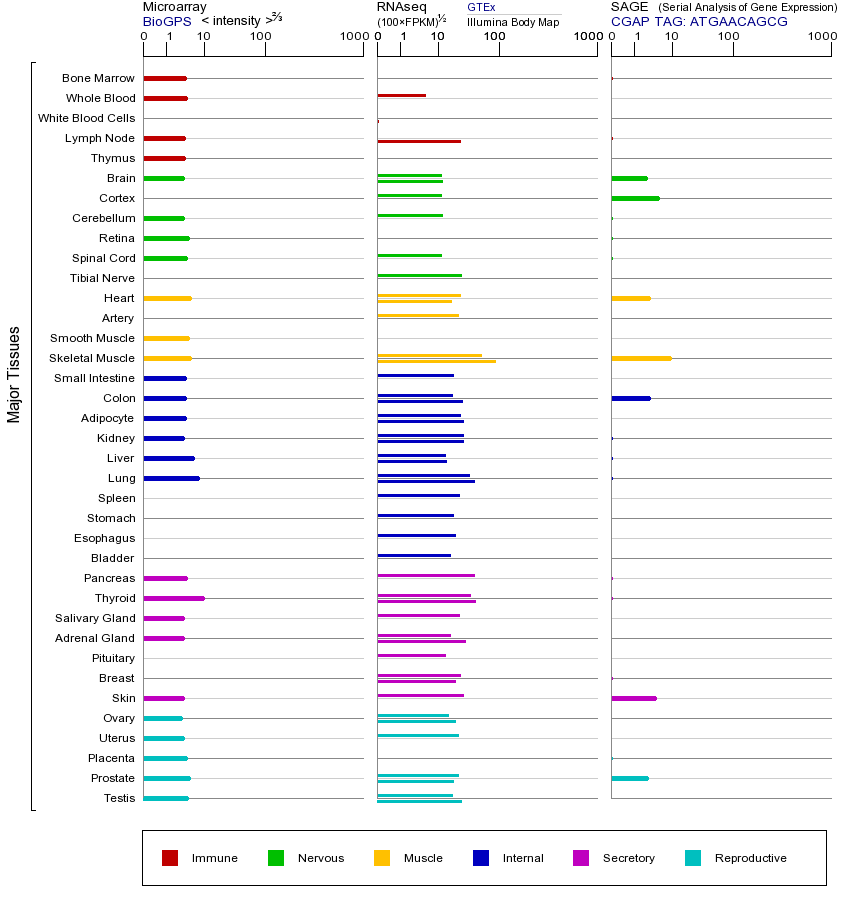
Tissue expression of TEAD4:    [UniProt]

Gene expression across tissues
Forward Primer
Forward Tm
Reverse Primer
Reverse Tm
Score
GACTTGGTAGGACTTTGCC
58
ACTCGTTGGAGGTAATGGT
58
CATGATCATCACCTGCTCC
58
TAGCGAGCATACTCTGTCTC
59
TACATCAAGCTCCGGACAG
59
AAAGGCTTCACATCATGGGA
59
AACAGAAGAGACCCAGCAC
60
ACTCGTTGGAGGTAATGGTG
60
AGATGTATGGTCGGAACGAG
59
TTTAGCTTGGCCTGGATCTC
60
TCTGCACAGATCATCTCCG
59
AAAGGCTTCACATCATGGGA
59
AGATGTATGGTCTCCAGCC
59
TTAGCTTGGCCTGGATCTC
59
CATGATCATCACCTGCTCC
58
TAGCGAGCATACTCTGTCTC
59
CATGATCATCACCTGCTCC
58
TAGCGAGCATACTCTGTCTC
59
CAAGCTAAAGACAGGTGCT
58
GATGATCTGTGCAGACGAC
58
Transcription Factors
Target Gene
Interaction Type
PubMed References
TEAD4
VEGFA
Repression

Subcellular localization of TEAD4 (and its protein):

[UniProt]     [GenomeNet]

" d="M482.414,245.296c3.539,4.293,4.455,10.009,0.202,11 c-4.244,0.996-4.983-10.983-8.293-8.438c-5.271,4.08,9.834,12.271,5.144,17.287c-3.717,3.607-6.172-5.75-10.839-1.976 c-4.673,3.776,6.781,7.299,2.831,11.326c-4.354,4.045-6.979-1.449-9.837-5.517c-1.193-1.742-2.059-3.851-3.595-2.748 c-1.516,1.078-1.854,1.795-0.938,3.666c2.374,4.854,9.235,10.119,5.156,12.535c-5.636,3.346-5.044-8.871-9.426-7.574 c-4.388,1.291,2.557,10.66-1.245,11.141c-4.089,0.545-3.483-10.239-6.979-8.575c-2.522,1.206-0.929,3.071-0.938,4.899 c0.004,1.32-0.964,3.6-2.372,4.062c-3.593,1.171-8.544-1.065-10.251-3.59c-6.04-8.93,0.396-15.997,4.639-7.015 c3.023,4.642,5.182,0.834,2.839-2.219c-1.032-1.354-4.309-5.901-0.781-7.252c2.904-1.113,4.271,1.941,5.985,4.592 c2.61,4.016,5.485,0.117,3.031-3.414c-1.828-2.633-2.74-3.803,3.156-7.42c6.405-4.369,6.52,3.869,10.077,0.646 c2.309-1.832-4.783-5.149,0.06-8.995c2.896-2.293,5.18,6.207,7.961,3.516c3.523-2.737-7.717-7.369,0.117-11.736 C473.413,240.77,480.519,242.891,482.414,245.296z"/> Extracellular space Cytosol Plasma membrane Cytoskeleton Lysosome Endosome Peroxisome ER Golgi Apparatus Nucleus Mitochondrion 0 1 2 3 4 5 Confidence
  • plasma membrane
  • cytoplasm
  • extracellular
  • golgi
  • vesicle
  • cytoskeleton
  • endoplasmic reticulum
  • nucleus
  • endosome
  • lysosome
  • mitochondrion

Gene Ontology (GO) terms for TEAD4:

GO ID
Protein
Source DB
GO:0003700
A0A0A0MRF3 (UniProtKB)
IEA
GO:0006355
A0A0A0MRF3 (UniProtKB)
IEA
GO:0003700
H0Y7B0 (UniProtKB)
IEA
GO:0006355
H0Y7B0 (UniProtKB)
IEA
GO:0003700
H0YFF9 (UniProtKB)
IEA
GO:0006355
H0YFF9 (UniProtKB)
IEA
GO:0003700
H0YG62 (UniProtKB)
IEA
GO:0006355
H0YG62 (UniProtKB)
IEA
GO:0003700
H0YGS2 (UniProtKB)
IEA
GO:0006355
H0YGS2 (UniProtKB)
IEA
GO:0001501
Q15561 (UniProtKB)
TAS
GO:0002230
Q15561 (UniProtKB)
IMP
GO:0003677
Q15561 (UniProtKB)
IEA
GO:0003700
Q15561 (UniProtKB)
IDA
GO:0003700
Q15561 (UniProtKB)
IDA
GO:0005515
Q15561 (UniProtKB)
IPI
GO:0005515
Q15561 (UniProtKB)
IPI
GO:0005515
Q15561 (UniProtKB)
IPI
GO:0005515
Q15561 (UniProtKB)
IPI
GO:0005515
Q15561 (UniProtKB)
IPI
GO:0005515
Q15561 (UniProtKB)
IPI
GO:0005515
Q15561 (UniProtKB)
IPI
GO:0005654
Q15561 (UniProtKB)
IDA
GO:0005654
Q15561 (UniProtKB)
TAS
GO:0005654
Q15561 (UniProtKB)
TAS
GO:0006357
Q15561 (UniProtKB)
TAS
GO:0006367
Q15561 (UniProtKB)
TAS
GO:0007517
Q15561 (UniProtKB)
TAS
GO:0035329
Q15561 (UniProtKB)
IDA
GO:0035329
Q15561 (UniProtKB)
IDA
GO:0098792
Q15561 (UniProtKB)
IMP
GO:0003677
Q53GI4 (UniProtKB)
IEA
GO:0003700
Q53GI4 (UniProtKB)
IEA
GO:0005654
Q53GI4 (UniProtKB)
IDA
GO:0006351
Q53GI4 (UniProtKB)
IEA
GO:0006355
Q53GI4 (UniProtKB)
IEA
GO:0035329
Q53GI4 (UniProtKB)
IEA

microRNAs potentially regulating TEAD4:     

String
BioGrid
IntAct
mentha
MINT
Reactome
Loading…
Interacting Gene Interaction Source/Score
Disease Score NofPmids NofSnps Source
Down Syndrome 0.00272435 1 0 LHGDN
Retinopathy of Prematurity 0.000271442 1 0 BeFree
Cutaneous Melanoma 0.000271442 1 3 BeFree
Malignant neoplasm of stomach 0.000271442 1 0 BeFree
Cataplexy 0.000271442 1 2 BeFree
melanoma 0.000271442 1 0 BeFree
Stomach Carcinoma 0.000271442 1 0 BeFree
Arginine methyltransferase PRMT1 equipoises trophoblast development to prevent early pregnancy loss.
Dasgupta P, Kumar R, Ray S, Roy N, Niloy AJ, Vallakati M, Marsh C, Arnold SJ, Paul S Nat Commun IF: 12.124 2026-07-10
The Evolutionarily Conserved TPM1 Super-Enhancer Drives Skeletal Muscle Regeneration via Mechanotransduction Signaling.
Zhang R, Feng W, Yang Y, Pan Y, Zou C, Wang L, Zhang S, Zhao Y, Wu Y, Wang J, Zou J, Cen K, Zhang Y, Huang H, Xu Y, Zhong L, Gong H, Cheng J, Liang J, Zheng Z, Jiang Q, Wei J, Li H, Liang M, Shi D, Yang S, Deng Y, Wei Y Adv Sci (Weinh) IF: 9.034 2026-02-00
The YAP-TEAD4 inhibitor M511-0965 suppresses triple-negative breast cancer progression by downregulating TGFB2.
Cheng M, Li X, Song N, Yang X, Ma X, Zhang H, Lei Y, Jia Y, Ba L, Zhang R, Bai L, Xu W, Qiao G Transl Oncol IF: 4.9 2026-09-00
Positive TAZ-TDG feedback loop drives proneural-to-mesenchymal transition to promote glioblastoma progression.
Yu W, Xie J, Peng L, Cai S, Gui S, Wang D, Tao Z, Xiao J, Cheng Z, Luo H J Transl Med IF: 3.786 2026-07-03
Cyclin K condensates bridge CDK12 to phosphorylate and drive oncogenic YAP activation in hepatocellular carcinoma.
Sun Y, Zhang Y, Yan W, Duan J, Qiao K, Yan G, Xue J, Wang J, Zhan M, Li Q, Wang H, Zhang Y Sci Adv IF: 12.5 2026-07-03
Emergence of invasive Escherichia coli pathobionts in gut microbiome promotes cancer stemness via targeting Hippo pathways.
Yu LC, Wei SC, Lin BR, Li YH, Liao YC, Peng YW, Lin CH, Hu PT, Pai YC, Lai LC, Chen YT, Huang CY, Jeng YM, Ni YH Gut Microbes IF: 15.3 2026-12-31
VGLL4 enhances PDK4 transcription and promotes metabolic dysfunction-associated fatty liver disease.
Chen Y, Wang X, Yu W, Gong M, Lu Y, Xu J, Zhang H, Yang R, Zhang H, Gao H, Gao Z, Yan J, Jiang Z, Zhang S, Ma X, Yu J, Wei F, Fu Q, Zhou Y, Zhou J, Wan J, Jin Y, Zhang L EMBO Rep IF: 6.0 2026-09-22
A regulatory circuitry driving a noradrenergic to mesenchymal transition highlights YAP/TAZ as critical players in neuroblastoma plasticity.
Gautier M, Kramdi A, Louis-Brennetot C, Pierre-Eugène C, Zaidi S, Lossec C, Raynal V, Baulande S, Delattre O, Thirant C, Janoueix-Lerosey I Cell Rep IF: 6.9 2026-05-26

Loading comments...

Log in to post comments Log In Sign Up

Contact

No. 2 Wenbo Road, Zhangqiu District, Jinan, Shandong

Qilu Normal University · Genelibs Bioinformatics Lab

750 Shunhua Rd, Jinan

2F, Bldg F, University Science Park

Tel: 0531-88819269

WeChat Official Account

Follow our WeChat subscription account for real-time updates and the latest in medical and biological research.


Business Email

E-mail: [email protected]

