
TSC1 (TSC complex subunit 1)

The TSC1 gene, which encodes the tumor suppressor protein Hamartin, is a critical component of the tuberous sclerosis complex (TSC) that functions as a heterodimeric complex with TSC2 (Tuberin) to maintain cellular homeostasis. This complex acts as a key negative regulator of the mechanistic target of rapamycin (mTOR) signaling pathway, a central hub governing cell growth, proliferation, metabolism, and protein synthesis. Mechanistically, the TSC1-TSC2 complex functions as a GTPase-activating protein (GAP) for the small GTPase Rheb, accelerating the hydrolysis of active GTP-bound Rheb into its inactive GDP-bound form, thereby preventing the constitutive activation of the mTORC1 complex. Disruption of this regulatory mechanism, typically caused by loss-of-function mutations such as nonsense, frameshift, or large deletions in TSC1, leads to the autosomal dominant disorder known as tuberous sclerosis complex (TSC), characterized by the development of benign hamartomas in multiple organs, epilepsy, intellectual disability, and dermatological abnormalities. Beyond TSC, TSC1 dysfunction is also implicated in lymphangioleiomyomatosis (LAM), autism spectrum disorders, and various malignancies, where unchecked mTOR signaling drives abnormal cell proliferation and metabolic dysregulation. Conversely, overexpression of TSC1 can excessively suppress mTOR activity, potentially impairing normal physiological growth processes. The functional interplay between TSC1 and TSC2 highlights the family’s role in preserving cellular stability, and clinically, this pathway is targeted by mTOR inhibitors, such as rapamycin derivatives, which can partially alleviate the symptoms associated with TSC by restoring the balance of growth signaling.
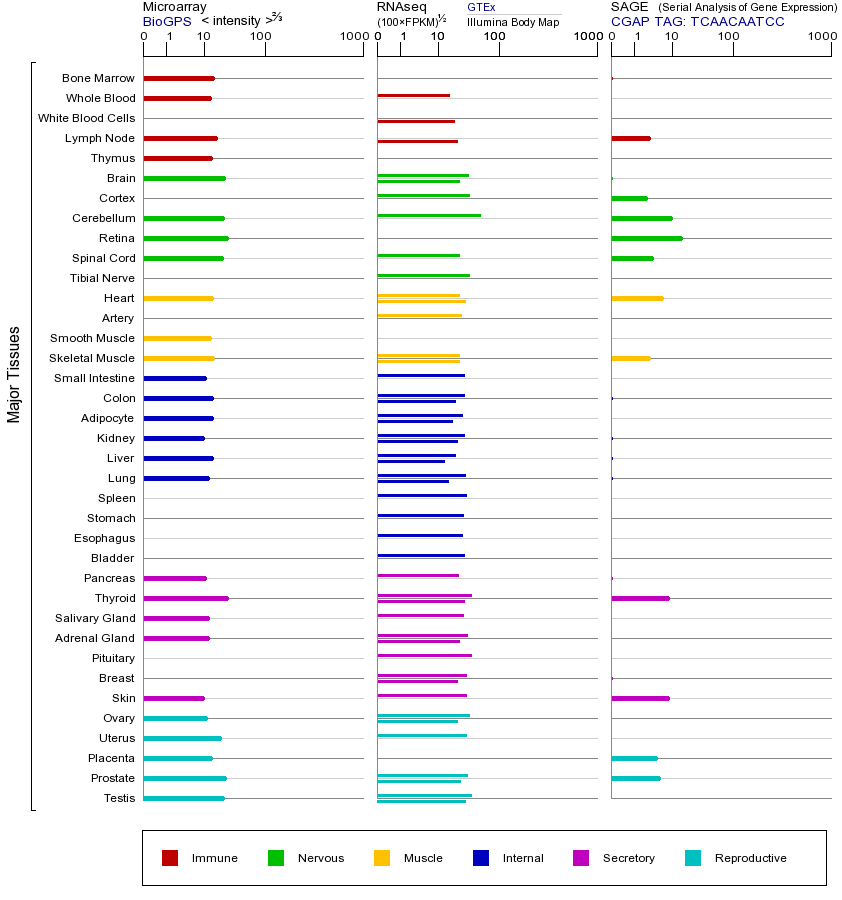
Gene Ontology
Subcellular localization of TSC1 (and its protein):
- plasma membrane
- cytoplasm
- extracellular
- golgi
- vesicle
- cytoskeleton
- endoplasmic reticulum
- nucleus
- endosome
- lysosome
- mitochondrion
Gene Ontology (GO) terms for TSC1:
| Interacting Gene | Interaction | Source/Score |
| Name |
|---|
| 4151 PI3K-Akt signaling pathway [PATH:hsa04151] |
| 4152 AMPK signaling pathway [PATH:hsa04152] |
| 4150 mTOR signaling pathway [PATH:hsa04150] |
| 4910 Insulin signaling pathway [PATH:hsa04910] |
| 5231 Choline metabolism in cancer [PATH:hsa05231] |
| Name |
|---|
| Energy dependent regulation of mTOR by LKB1-AMPK |
| Gene Expression |
| Generic Transcription Pathway |
| IGF1R signaling cascade |
| Inhibition of TSC complex formation by PKB |
| Insulin receptor signalling cascade |
| IRS-mediated signalling |
| IRS-related events |
| IRS-related events triggered by IGF1R |
| mTOR signalling |
| PI3K Cascade |
| PKB-mediated events |
| Regulation of Rheb GTPase activity by AMPK |
| Signaling by Insulin receptor |
| Signaling by Type 1 Insulin-like Growth Factor 1 Receptor (IGF1R) |
| TP53 Regulates Metabolic Genes |
| Transcriptional Regulation by TP53 |
| Disease | Score | NofPmids | NofSnps | Source |
| Tuberous Sclerosis | 0.465677729 | 247 | 37 | BeFree_CLINVAR_CTD_human_GAD_LHGDN_ORPHANET |
| TUBEROUS SCLEROSIS 1 (disorder) | 0.443181358 | 10 | 31 | BeFree_CLINVAR_CTD_human_GAD_MGD_UNIPROT |
| Lymphangioleiomyomatosis | 0.365700279 | 21 | 2 | BeFree_CLINVAR_CTD_human_ORPHANET |
| FOCAL CORTICAL DYSPLASIA OF TAYLOR | 0.24 | 1 | 0 | CTD_human_ORPHANET |
| Autistic Disorder | 0.203267234 | 4 | 0 | BeFree_CTD_human_LHGDN_MGD |
| Renal Cell Carcinoma | 0.131129117 | 42 | 0 | BeFree_CTD_human |
| Malignant neoplasm of urinary bladder | 0.130043349 | 37 | 2 | BeFree_CLINVAR |
| Liver carcinoma | 0.12868614 | 33 | 0 | BeFree_CTD_human |
| Squamous cell carcinoma | 0.127881746 | 19 | 0 | BeFree_CTD_human_LHGDN |
| West Syndrome | 0.123538676 | 5 | 0 | BeFree_CTD_human_LHGDN |

Contact
No. 2 Wenbo Road, Zhangqiu District, Jinan, Shandong
Qilu Normal University · Genelibs Bioinformatics Lab
750 Shunhua Rd, Jinan
2F, Bldg F, University Science Park
Tel: 0531-88819269
WeChat Official Account
Follow our WeChat subscription account for real-time updates and the latest in medical and biological research.
Business Email
E-mail: [email protected]

Copyright © 2026.Genelibs Jinan Honghui Biotechnology Co., Ltd. 鲁ICP备20007159号-2
