
TSC2 (TSC complex subunit 2)

symbol
TSC2
locus group
protein-coding gene
location
16p13.3
gene_family
Protein phosphatase 1 regulatory subunits
alias symbol
tuberin|LAM|PPP1R160
alias name
protein phosphatase 1, regulatory …
entrez id
7249
ensembl gene id
ENSG00000103197
ucsc gene id
uc002con.4
refseq accession
NM_000548
hgnc_id
HGNC:12363
approved reserved
1989-05-25
16p13.3
ChineseEnglish

The TSC2 gene, which encodes the tumor suppressor protein tuberin, is a critical member of the tuberous sclerosis complex (TSC) gene family that operates in conjunction with TSC1 (hamartin) to form a heterodimeric complex essential for the precise regulation of cellular growth and proliferation. This TSC1-TSC2 complex functions as a central negative regulator of the mechanistic target of rapamycin (mTOR) signaling pathway, a master controller that integrates growth factor, energy, and nutrient signals to govern cell metabolism, protein synthesis, and overall cellular homeostasis. By inhibiting mTOR activity, tuberin ensures that cell division and growth are appropriately modulated in response to environmental cues; however, loss-of-function mutations in TSC2 disrupt this regulatory mechanism, leading to constitutive mTOR activation that drives abnormal cell proliferation. This dysregulation is the primary driver of tuberous sclerosis complex (TSC), an autosomal dominant genetic disorder characterized by the development of benign hamartomatous tumors in multiple organs, including the brain, kidneys, and skin, often accompanied by clinical manifestations such as epilepsy, intellectual disability, and cutaneous lesions. Furthermore, the disruption of TSC2-mediated mTOR suppression significantly elevates the risk of malignant transformation, particularly renal cell carcinoma, while aberrant overexpression of TSC2 can conversely impair normal cellular growth and repair processes by excessively suppressing mTOR. Consequently, understanding the molecular mechanisms of TSC2 is pivotal for the development of therapeutic strategies, including the use of mTOR inhibitors such as rapamycin analogs, to manage TSC and related malignancies.
Nucleotide sequence of TSC2:[NCBI]
Loading Gene Browser...
Protein Sequence
1MAKPTSKDSG LKEKFKILLG LGTPRPNPRS AEGKQTEFII
41TAEILRELSM ECGLNNRIRM IGQICEVAKT KKFEEHAVEA
81 LWKAVADLL QPERPLEARH AVLALLKAIV QGQGERLGVL
121RALFFKVIKD YPSNEDLHER LEVFKALTDN GRHITYLEEE
161L ADFVLQWM DVGLSSEFLL VLVNLVKFNS CYLDEYIARM
201VQMICLLCVR TASSVDIEVS LQVLDAVVCY NCLPAESLPL
241FI VTLCRTI NVKELCEPCW KLMRNLLGTH LGHSAIYNMC
281HLMEDRAYME DAPLLRGAVF FVGMALWGAH RLYSLRNSPT
321SVL PSFYQA MACPNEVVSY EIVLSITRLI KKYRKELQVV
361AWDILLNIIE RLLQQLQTLD SPELRTIVHD LLTTVEELCD
401QNEF HGSQE RYFELVERCA DQRPESSLLN LISYRAQSIH
441PAKDGWIQNL QALMERFFRS ESRGAVRIKV LDVLSFVLLI
481NRQFY EEEL INSVVISQLS HIPEDKDHQV RKLATQLLVD
521LAEGCHTHHF NSLLDIIEKV MARSLSPPPE LEERDVAAYS
561ASLEDV KTA VLGLLVILQT KLYTLPASHA TRVYEMLVSH
601IQLHYKHSYT LPIASSIRLQ AFDFLLLLRA DSLHRLGLPN
641KDGVVRF SP YCVCDYMEPE RGSEKKTSGP LSPPTGPPGP
681APAGPAVRLG SVPYSLLFRV LLQCLKQESD WKVLKLVLGR
721LPESLRYK V LIFTSPCSVD QLCSALCSML SGPKTLERLR
761GAPEGFSRTD LHLAVVPVLT ALISYHNYLD KTKQREMVYC
801LEQGLIHRC ASQCVVALSI CSVEMPDIII KALPVLVVKL
841THISATASMA VPLLEFLSTL ARLPHLYRNF AAEQYASVFA
881ISLPYTNPSK FNQYIVCLA HHVIAMWFIR CRLPFRKDFV
921PFITKGLRSN VLLSFDDTPE KDSFRARSTS LNERPKSLRI
961ARPPKQGLNN S PPVKEFKE SSAAEAFRCR SISVSEHVVR
1001SRIQTSLTSA SLGSADENSV AQADDSLKNL HLELTETCLD
1041MMARYVFSNF TA VPKRSPV GEFLLAGGRT KTWLVGNKLV
1081TVTTSVGTGT RSLLGLDSGE LQSGPESSSS PGVHVRQTKE
1121APAKLESQAG QQV SRGARD RVRSMSGGHG LRVGALDVPA
1161SQFLGSATSP GPRTAPAAKP EKASAGTRVP VQEKTNLAAY
1201VPLLTQGWAE ILVR RPTGN TSWLMSLENP LSPFSSDINN
1241MPLQELSNAL MAAERFKEHR DTALYKSLSV PAASTAKPPP
1281LPRSNTVASF SSLYQ SSCQ GQLHRSVSWA DSAVVMEEGS
1321PGEVPVLVEP PGLEDVEAAL GMDRRTDAYS RSSSVSSQEE
1361KSLHAEELVG RGIPIE RVV SSEGGRPSVD LSFQPSQPLS
1401KSSSSPELQT LQDILGDPGD KADVGRLSPE VKARSQSGTL
1441DGESAAWSAS GEDSRGQ PE GPLPSSSPRS PSGLRPRGYT
1481ISDSAPSRRG KRVERDALKS RATASNAEKV PGINPSFVFL
1521QLYHSPFFGD ESNKPILL P NESQSFERSV QLLDQIPSYD
1561THKIAVLYVG EGQSNSELAI LSNEHGSYRY TEFLTGLGRL
1601IELKDCQPDK VYLGGLDVC GEDGQFTYCW HDDIMQAVFH
1641IATLMPTKDV DKHRCDKKRH LGNDFVSIVY NDSGEDFKLG
1681TIKGQFNFVH VIVTPLDYEC NLVSLQCRK DMEGLVDTSV
1721AKIVSDRNLP FVARQMALHA NMASQVHHSR SNPTDIYPSK
1761WIARLRHIKR LRQRICEEAA Y SNPSLPLV HPPSHSKAPA
1801QTPAEPTPGY EVGQRKRLIS SVEDFTEFV
Structure predicted by AlphaFold DB(UniProt: P49815). Color indicates pLDDT confidence (dark blue = high, yellow/orange = low).
SNP variants of TSC2:           Showing partial SNPs
rs2233516       rs2233517       rs2233518       rs2233519       rs2302172       rs2516739       rs2516740       rs3087469       rs3211962       rs3211966       rs3211967       rs3211968       rs3211970       rs3211971       rs3760042       rs11860955       rs28537973      

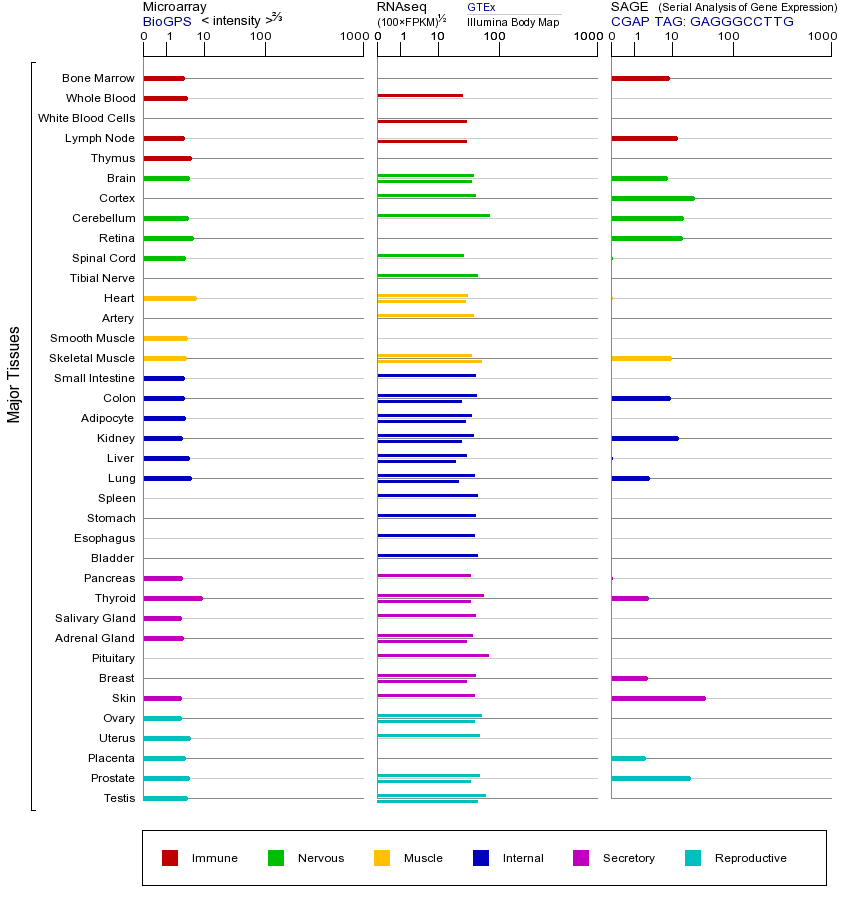
Tissue expression of TSC2:    [UniProt]

Gene expression across tissues
Forward Primer
Forward Tm
Reverse Primer
Reverse Tm
Score
GGTCCAATGTCCTCTTGTC
58
TGTATCCTGCTCTTGGGTC
59
CAGTTCAACTTTGTCCACGT
59
CCTCCATGTCTTTCCTGCA
60
GATGACATCATGCAAGGACG
60
TGTAGACAATGGACACAAAGTC
59
CAGTTCAACTTTGTCCACGT
59
CCTCCATGTCTTTCCTGCA
60
GGTCCAATGTCCTCTTGTC
58
TCTGTATCCTGCTCTTGGG
59
AGAGACCCAAGAGTCTGAG
58
CTCTCCTTGAATTCTTTCACG
57
GAGACCCAAGAGGATACAGAC
59
TTTCAGGCTATCGTCAGCC
60
GAGACCCAAGAGGATACAGAC
59
TTTCAGGCTATCGTCAGCC
60
CAGTTCAACTTTGTCCACGT
59
CCTCCATGTCTTTCCTGCA
60
GAACTGAGCATGGAATGTGG
59
ACAGCAGACAGATCATCCTC
59
Transcription Factors
Target Gene
Interaction Type
PubMed References
AR
TSC2
Repression

Subcellular localization of TSC2 (and its protein):

[UniProt]     [GenomeNet]

" d="M482.414,245.296c3.539,4.293,4.455,10.009,0.202,11 c-4.244,0.996-4.983-10.983-8.293-8.438c-5.271,4.08,9.834,12.271,5.144,17.287c-3.717,3.607-6.172-5.75-10.839-1.976 c-4.673,3.776,6.781,7.299,2.831,11.326c-4.354,4.045-6.979-1.449-9.837-5.517c-1.193-1.742-2.059-3.851-3.595-2.748 c-1.516,1.078-1.854,1.795-0.938,3.666c2.374,4.854,9.235,10.119,5.156,12.535c-5.636,3.346-5.044-8.871-9.426-7.574 c-4.388,1.291,2.557,10.66-1.245,11.141c-4.089,0.545-3.483-10.239-6.979-8.575c-2.522,1.206-0.929,3.071-0.938,4.899 c0.004,1.32-0.964,3.6-2.372,4.062c-3.593,1.171-8.544-1.065-10.251-3.59c-6.04-8.93,0.396-15.997,4.639-7.015 c3.023,4.642,5.182,0.834,2.839-2.219c-1.032-1.354-4.309-5.901-0.781-7.252c2.904-1.113,4.271,1.941,5.985,4.592 c2.61,4.016,5.485,0.117,3.031-3.414c-1.828-2.633-2.74-3.803,3.156-7.42c6.405-4.369,6.52,3.869,10.077,0.646 c2.309-1.832-4.783-5.149,0.06-8.995c2.896-2.293,5.18,6.207,7.961,3.516c3.523-2.737-7.717-7.369,0.117-11.736 C473.413,240.77,480.519,242.891,482.414,245.296z"/> Extracellular space Cytosol Plasma membrane Cytoskeleton Lysosome Endosome Peroxisome ER Golgi Apparatus Nucleus Mitochondrion 0 1 2 3 4 5 Confidence
  • plasma membrane
  • cytoplasm
  • extracellular
  • golgi
  • vesicle
  • cytoskeleton
  • endoplasmic reticulum
  • nucleus
  • endosome
  • lysosome
  • mitochondrion

Gene Ontology (GO) terms for TSC2:

GO ID
Protein
Source DB
GO:0005096
H3BMQ0 (UniProtKB)
IEA
GO:0005737
H3BMQ0 (UniProtKB)
IDA
GO:0032007
H3BMQ0 (UniProtKB)
IEA
GO:0033596
H3BMQ0 (UniProtKB)
IEA
GO:0043547
H3BMQ0 (UniProtKB)
IEA
GO:0051056
H3BMQ0 (UniProtKB)
IEA
GO:0005096
H3BNT5 (UniProtKB)
IEA
GO:0032007
H3BNT5 (UniProtKB)
IEA
GO:0033596
H3BNT5 (UniProtKB)
IEA
GO:0043547
H3BNT5 (UniProtKB)
IEA
GO:0005096
H3BQK4 (UniProtKB)
IEA
GO:0032007
H3BQK4 (UniProtKB)
IEA
GO:0033596
H3BQK4 (UniProtKB)
IEA
GO:0043547
H3BQK4 (UniProtKB)
IEA
GO:0051056
H3BQK4 (UniProtKB)
IEA
GO:0001843
P49815 (UniProtKB)
ISS
GO:0005096
P49815 (UniProtKB)
IDA
GO:0005515
P49815 (UniProtKB)
IPI
GO:0005515
P49815 (UniProtKB)
IPI
GO:0005515
P49815 (UniProtKB)
IPI
GO:0005515
P49815 (UniProtKB)
IPI
GO:0005515
P49815 (UniProtKB)
IPI
GO:0005515
P49815 (UniProtKB)
IPI
GO:0005515
P49815 (UniProtKB)
IPI
GO:0005515
P49815 (UniProtKB)
IPI
GO:0005515
P49815 (UniProtKB)
IPI
GO:0005515
P49815 (UniProtKB)
IPI
GO:0005515
P49815 (UniProtKB)
IPI
GO:0005515
P49815 (UniProtKB)
IPI
GO:0005515
P49815 (UniProtKB)
IPI
GO:0005515
P49815 (UniProtKB)
IPI
GO:0005515
P49815 (UniProtKB)
IPI
GO:0005515
P49815 (UniProtKB)
IPI
GO:0005515
P49815 (UniProtKB)
IPI
GO:0005515
P49815 (UniProtKB)
IPI
GO:0005515
P49815 (UniProtKB)
IPI
GO:0005634
P49815 (UniProtKB)
IDA
GO:0005737
P49815 (UniProtKB)
IDA
GO:0005737
P49815 (UniProtKB)
IDA
GO:0005737
P49815 (UniProtKB)
IDA
GO:0005764
P49815 (UniProtKB)
IDA
GO:0005794
P49815 (UniProtKB)
IDA
GO:0005829
P49815 (UniProtKB)
IDA
GO:0005829
P49815 (UniProtKB)
TAS
GO:0005829
P49815 (UniProtKB)
TAS
GO:0005829
P49815 (UniProtKB)
TAS
GO:0005829
P49815 (UniProtKB)
TAS
GO:0005829
P49815 (UniProtKB)
TAS
GO:0005829
P49815 (UniProtKB)
TAS
GO:0005829
P49815 (UniProtKB)
TAS
GO:0006469
P49815 (UniProtKB)
ISS
GO:0006606
P49815 (UniProtKB)
ISS
GO:0006897
P49815 (UniProtKB)
TAS
GO:0007050
P49815 (UniProtKB)
TAS
GO:0007507
P49815 (UniProtKB)
ISS
GO:0008104
P49815 (UniProtKB)
ISS
GO:0008285
P49815 (UniProtKB)
ISS
GO:0014067
P49815 (UniProtKB)
ISS
GO:0016020
P49815 (UniProtKB)
IDA
GO:0016032
P49815 (UniProtKB)
IEA
GO:0016192
P49815 (UniProtKB)
TAS
GO:0019902
P49815 (UniProtKB)
IDA
GO:0030100
P49815 (UniProtKB)
ISS
GO:0030178
P49815 (UniProtKB)
IBA
GO:0031267
P49815 (UniProtKB)
IPI
GO:0032007
P49815 (UniProtKB)
IBA
GO:0033596
P49815 (UniProtKB)
IDA
GO:0042803
P49815 (UniProtKB)
IPI
GO:0043491
P49815 (UniProtKB)
ISS
GO:0043547
P49815 (UniProtKB)
IEA
GO:0046626
P49815 (UniProtKB)
ISS
GO:0046627
P49815 (UniProtKB)
IBA
GO:0048009
P49815 (UniProtKB)
ISS
GO:0048471
P49815 (UniProtKB)
IDA
GO:0050918
P49815 (UniProtKB)
ISS
GO:0051056
P49815 (UniProtKB)
IEA
GO:0051726
P49815 (UniProtKB)
IBA
GO:0051898
P49815 (UniProtKB)
ISS
GO:0051898
P49815 (UniProtKB)
IBA
GO:0005634
P49815 (UniProtKB)
IDA
GO:0005794
P49815 (UniProtKB)
IDA
GO:0005737
P49815 (UniProtKB)
IDA

microRNAs potentially regulating TSC2:     

String
BioGrid
IntAct
mentha
MINT
Reactome
Loading…
Interacting Gene Interaction Source/Score
Disease Score NofPmids NofSnps Source
Lymphangioleiomyomatosis 0.576859191 35 5 BeFree_CLINVAR_CTD_human_LHGDN_MGD_ORPHANET_UNIPROT
Tuberous Sclerosis 0.493815383 277 72 BeFree_CLINVAR_CTD_human_GAD_LHGDN_ORPHANET
TUBEROUS SCLEROSIS 2 (disorder) 0.441357209 14 71 BeFree_CLINVAR_CTD_human_MGD_UNIPROT
Autistic Disorder 0.203810118 6 0 BeFree_CTD_human_LHGDN_MGD
Epilepsy 0.126710102 17 0 BeFree_CTD_human_GAD
Squamous cell carcinoma 0.122995792 2 0 BeFree_CTD_human_LHGDN
Pancreatic Neoplasm 0.12272435 2 0 CTD_human_LHGDN
Kidney Neoplasm 0.122171535 11 0 BeFree_CTD_human
Seizures 0.121900093 8 0 BeFree_CTD_human
West Syndrome 0.121628651 7 0 BeFree_CTD_human
Genkwanin enhances survival of rat random skin flap: promoting autophagic flux by modulation of AMPK/TSC2/mTOR signaling pathway through SIRT1.
Zhang JX, Li YB, Lu JP, Le JD, Wu ZH, Jin YC, Chen SY, Cai LY, Chen L Biochem Pharmacol IF: 6.5 2026-05-00
Utility of Next-Generation Sequencing in Renal Neoplasia, Including Tumors With Clear Cytoplasm and Rare Phenotypes (ELOC/MITF Alterations and Mismatch Repair Deficiency).
McCarthy M, Wojcik AA, Barr Fritcher EG, Tekin B, Shen W, Al-Kateb H, Dasari S, Lucas PC, Ebare K, Reynolds JP, Stanton ML, Raghunathan A, Whaley RD, Erickson LA, Hernandez LH, Jimenez RE, Costello BA, Potretzke A, Boorjian SA, Sharma V, Leibovich BC, Cheville JC, Kipp BR, Gupta S Mayo Clin Proc IF: 6.5 2026-02-12
Case Report: mTOR inhibitor treatment for epithelioid angiomyolipoma harboring biallelic TSC2 mutations.
Ishikawa S, Ouchi K, Wakayama S, Kasahara Y, Komine K, Imai H, Saijo K, Yamazaki Y, Takahashi M, Shirota H, Kawakami H Front Oncol IF: 3.4 None
Matched tissue-blood whole-exome sequencing improves detection of genetic etiologies in pediatric drug-resistant epilepsy.
Ruan Y, Chen L, Xia S, Lu Q, Wang J, Zhu F, Li N, Du H, Sun D Front Pediatr IF: 2.2 None
Case Report: A case of ruptured renal epithelioid angiomyolipoma leading to the diagnosis of TSC2/PKD1 contiguous gene syndrome.
Akiba T, Shimada S, Ikegami M, Nishizaki N, Hashizume A, Nozaki T, Nagashima Y, Tsujimura A, Nakazawa-Tanaka N, Miyano G, Takahashi K, Shoji H Front Pediatr IF: 2.2 None
A clinical entity of multiple ureteral fibroepithelial polyps with annular stenosis and tortuosity: clinical features and management considerations.
Li X, Yu X, Xu L, Zhao F, Ying H, Tao Z, Wang X, Zhang L, Li Z, Yang K, Zhou L, Wang G, Li X Ther Adv Urol IF: 3.5 None
Novel epigenetic marks of insulin resistance trajectories in a longitudinal study of childhood obesity.
Anguita-Ruiz A, Torres-Martos Á, Bustos-Aibar M, Setó-Llorens A, Ruiz-Ojeda FJ, Moreno LA, Gil Á, Gil-Campos M, Bueno G, Leis R, Alcalá-Fdez J, Aguilera CM Cardiovasc Diabetol IF: 4.752 2026-02-24
Nitric Oxide-Mediated S-Nitrosylation of TSC2 Drives mTOR dysregulation across Shank3 and Cntnap2 Models of Autism Spectrum Disorder.
Ojha SK, Kartawy M, Hamoudi W, Tripathi MK, Aran A, Amal H Mol Psychiatry IF: 10.4 2026-07-00
Long-Term Impact of Cenobamate on Cognition, Adaptive Behavior, and Quality of Life in Patients with Tuberous Sclerosis Complex.
Operto FF, Pastorino GMG, Charlier B, Izzo V, Martino I, Moavero R, Mungo N, Olivieri M, Sammara I, Gambardella A Neurol Ther IF: 4.7 2026-04-00
TSC2 GAP Domain V1646Cfs*7 Variant Alters Protein Stability and Interaction Networks in Tuberous Sclerosis Complex.
Utami KH, Han VX, Mohammad Yusof NAB, Ramaswamy Y, Feng J, Tay SKH, Langley SR, Pouladi MA Neurol Genet IF: 3.3 2026-04-00

Loading comments...

Log in to post comments Log In Sign Up

Contact

No. 2 Wenbo Road, Zhangqiu District, Jinan, Shandong

Qilu Normal University · Genelibs Bioinformatics Lab

750 Shunhua Rd, Jinan

2F, Bldg F, University Science Park

Tel: 0531-88819269

WeChat Official Account

Follow our WeChat subscription account for real-time updates and the latest in medical and biological research.


Business Email

E-mail: [email protected]

